
The 1979 Islamic Revolution was shaped in part by international conditions, but it was ultimately driven by internal mobilization in Iran.
Socialists, Marxists, and the Mojahedin-e Khalq (MEK) spread anti-monarchy, anti-imperialism, and anti-West ideology through universities and underground networks.
At the same time, Jimmy Carter’s administration withdrew support for the Shah. BBC Farsi became an influential external source of information. France allowed Ruhollah Khomeini to operate from exile near Paris, where his speeches and interviews were recorded and circulated widely inside Iran.
As protests spread nationwide, strikes paralyzed the economy, the military fractured internally, and political legitimacy rapidly collapsed.
In 1979, Mohammad Reza Shah Pahlavi left the country, and Khomeini returned from exile and became the central authority of the new Islamic Republic.
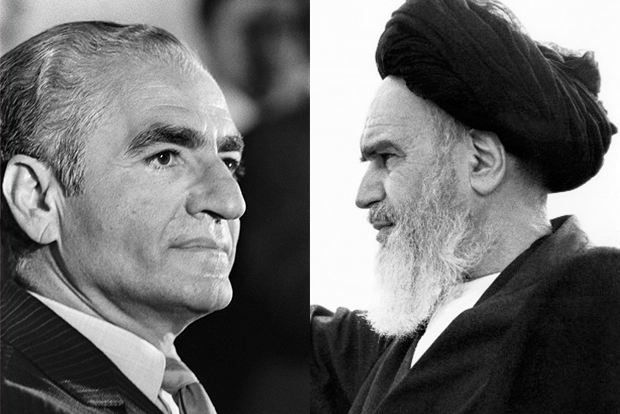
Within months, millions of Iranians who believed they were voting for political reform and national independence instead lost their freedom and sovereignty to Ruhollah Khomeini under his doctrine of Velayat-e faqih, which transferred ultimate authority from elected institutions to him as Supreme Leader.
His reasoning was that during the occultation of Muhammad al-Mahdi, the Twelfth Imam in Twelver Shi’a theology, who is believed to have disappeared in the 9th century and is expected to return at the end of history to establish justice and legitimate Islamic rule over the entire world, political authority belongs to a senior Islamic jurist acting as his representative on earth.
The state was no longer national in the modern sense. It became ideological by design, transforming Iran into an Islamist theocracy governed by a strict interpretation of sharia law.
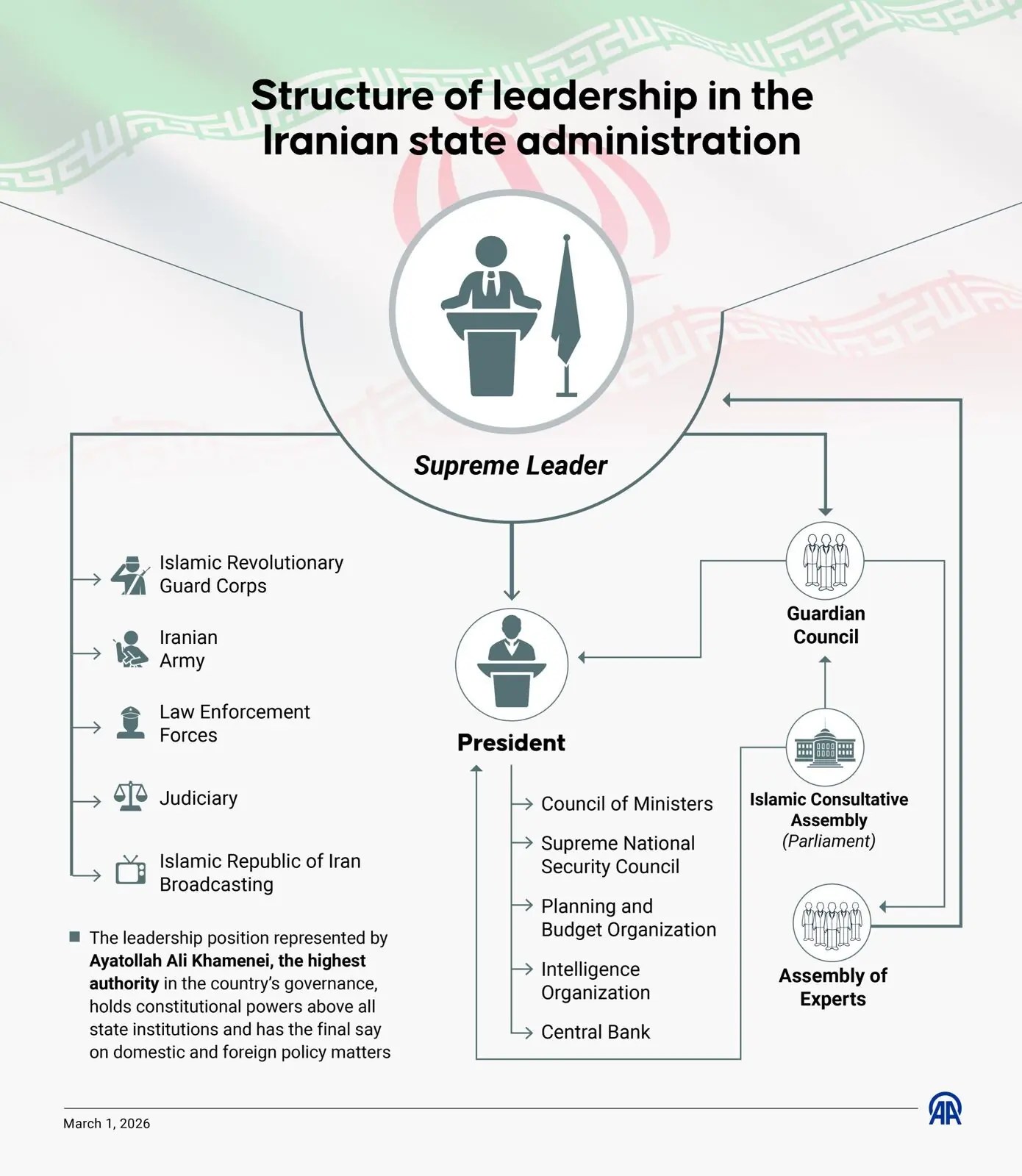
As Supreme Leader, he now controlled the armed forces, the Islamic Revolutionary Guard Corps (IRGC), and the Basij; the intelligence services; the judiciary; state broadcasting; senior military leadership; and half of the Guardian Council, bringing the core institutions of the state under clerical control.
Parliament no longer held final authority. Presidential elections continued, but they no longer determined the state’s direction. This concentration of power created the conditions for a new ideological foreign policy.
Khomeini viewed the United States, Israel, and the West as ideological enemies and promoted the expansion of the Islamic ideology beyond Iran’s borders. This doctrine justified the long-term use of national resources to support regional proxies aligned with the regime’s political and religious objectives.
At the same time, large portions of Iran’s wealth were redirected toward the security apparatus, revolutionary foundations, and the war with Iraq, while living standards declined sharply.
What had been a modernizing country with a growing middle class was replaced by a system that enforced religious law and public morality through surveillance, punishment, and fear, penalizing even minor acts of dissent or non-compliance.
After Khomeini’s death in 1989, Ali Khamenei was selected not by public vote, but by the Assembly of Experts aligned with the system he inherited. He later “issued a fatwah, or Islamic edict, demanding that people obey him as the earthly “deputy” of both the Prophet Muhammad and Shi’ism’s mysterious 12th Imam.”
Source: https://www.voanews.com/a/irans-supreme-leader-says-he-represents-prophet-muhammad-on-earth-98945624/172166.html
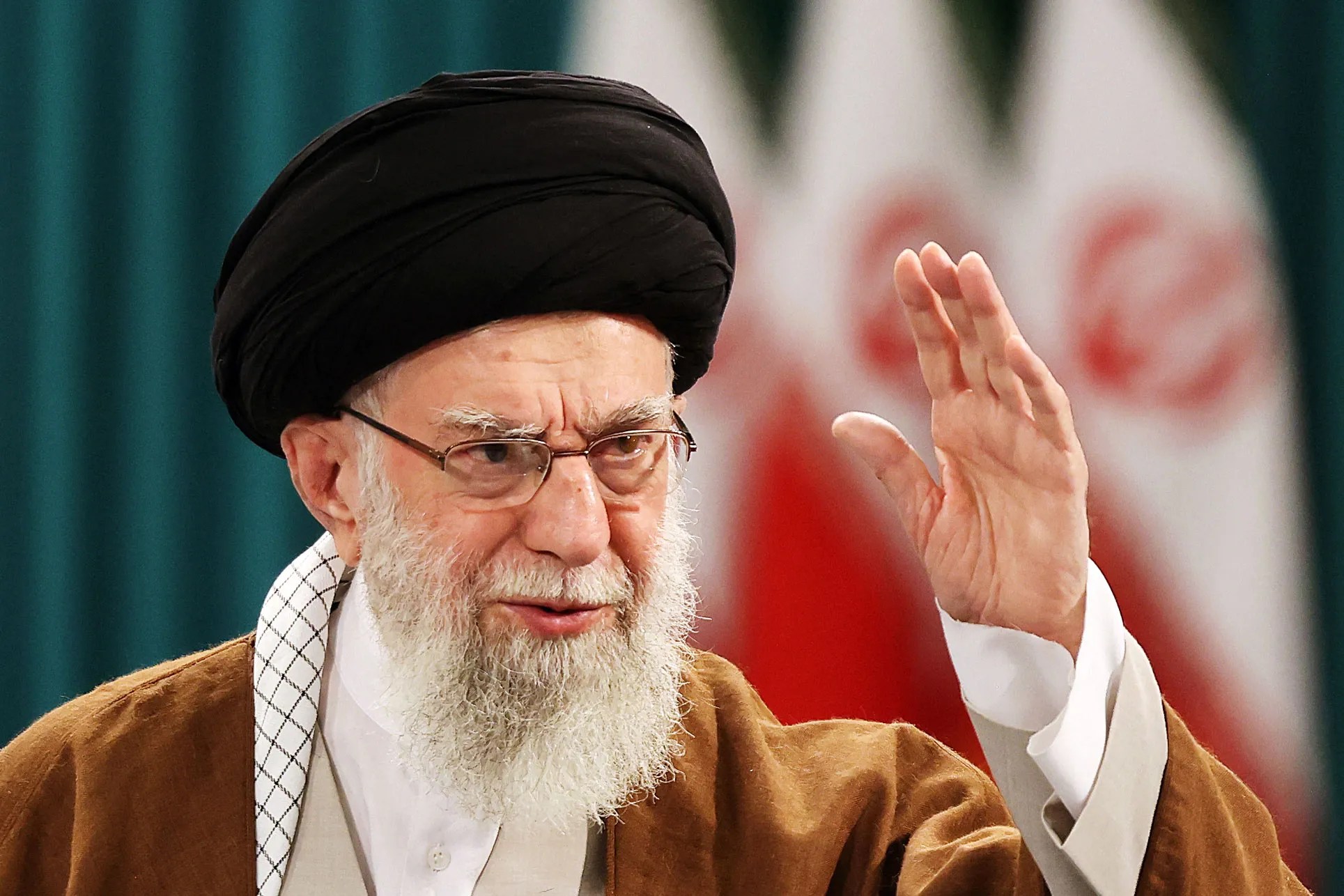
Under his rule, authority became further concentrated in security institutions and unelected oversight bodies loyal to his office, while nationwide protest movements were repeatedly suppressed through mass arrests, shootings, and executions.
Control over vast economic assets expanded further under structures linked to the Supreme Leader’s office and IRGC leadership. Ali Khamenei’s wealth has been estimated at $100-200 billion, held through international property holdings and protected financial networks outside Iran.
https://www.facebook.com/watch/?v=1448919953349478
Despite Iran’s vast oil and natural resource wealth, large segments of the population continue to face inflation, unemployment, and deepening poverty.
In March 2026, following Ali Khamenei’s death, the Assembly of Experts announced his son Mojtaba Khamenei as the new Supreme Leader.
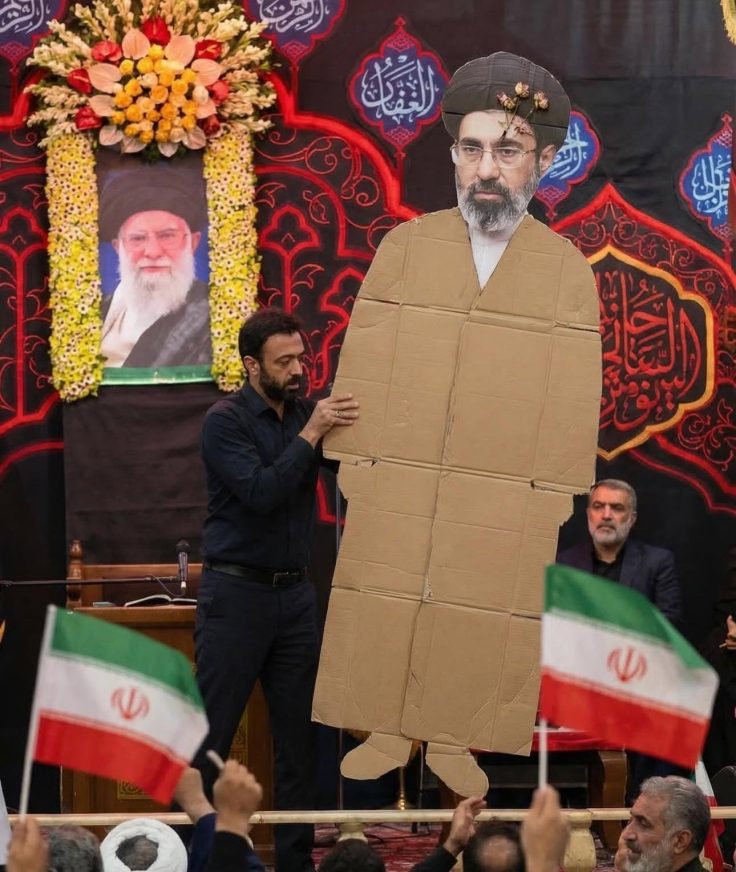
No independent confirmation of his condition has been provided, reflecting the opaque nature of leadership succession inside the Islamic Republic and fuelling widespread speculation that he is severely injured or even dead.
Many Iranians watching anti-war movements across the West today are deeply concerned. They have seen how calls framed as anti-imperialism and peace in the years before the Iranian Revolution helped weaken support for democratic institutions and strengthen ideological movements that ultimately replaced them with far-right authoritarian rule. Many now fear that the same pattern is repeating itself. This time in the West.
This is why the Iranian diaspora continues to fight to correct false narratives circulating online that have been shaped by the Islamic regime’s propaganda and amplified by mainstream Western media.

