
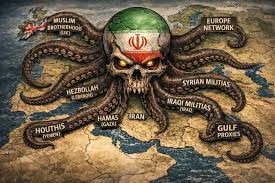
The Islamic Republic is built on velayat-e faqih. Since 1979, the regime has treated the expansion of its Twelver Shiʿa ideology beyond Iran’s borders as a constitutional mandate, not a national interest.
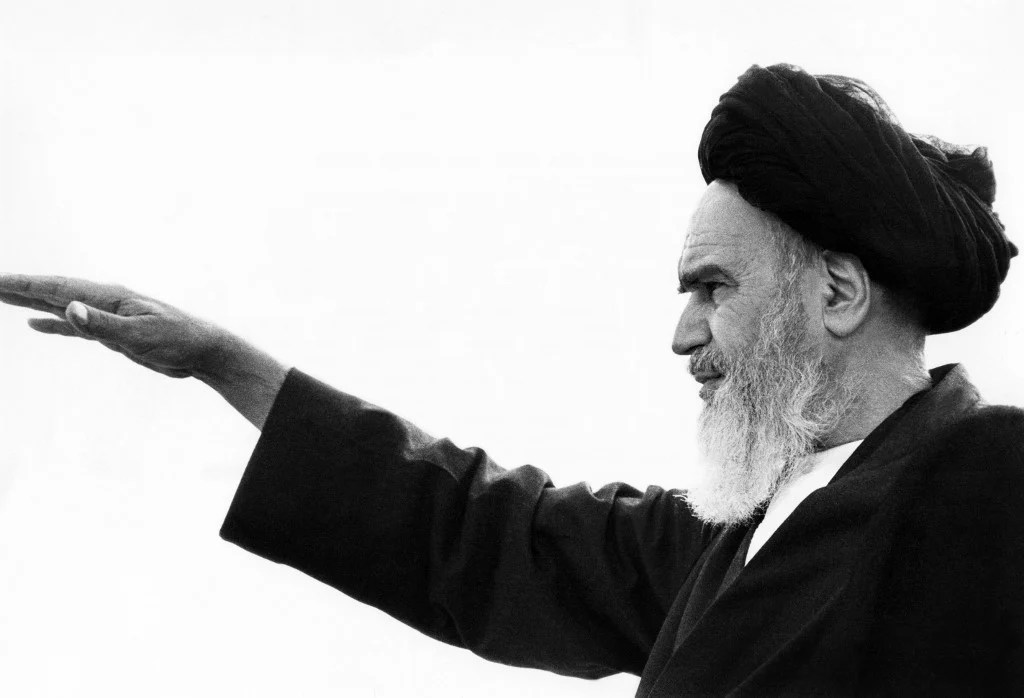
This Islamist expansion is not rhetorical. It is operational.
The IRGC’s foreign operations branch, the Quds Force, has spent decades building one of the most extensive proxy warfare networks in the modern world across the Middle East and beyond. The regime has worked to increase coordination among these forces into what it calls an “axis of resistance.” https://www.cfr.org/articles/irans-regional-armed-network
These proxies are not informal allies. They are armed Islamist organizations funded, trained, equipped, and strategically directed by the regime while remaining outside its formal military structure. This allows power to be projected across borders without conventional war, formal attribution, or direct accountability.
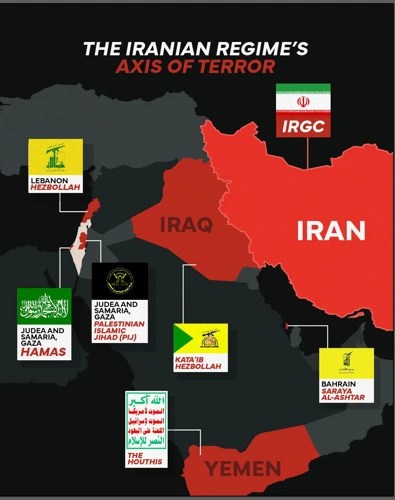
Major examples include Hezbollah in Lebanon, Hamas and Palestinian Islamic Jihad in Gaza, Kata’ib Hezbollah in Iraq, and the Houthis in Yemen. Several of these organizations are formally designated as terrorist entities by the United States, the European Union, the United Kingdom, Canada, Australia, and others, reflecting the scale and persistence of their international operations.
https://www.unitedagainstnucleariran.com/ideological-expansion/irans-ideological-expansion-middle-east
In several countries, these groups no longer operate at the margins. They are embedded inside state institutions, security systems, and political structures. Governments often lack the ability to remove them without triggering internal instability or wider regional escalation.
This is not accidental. It is how the system was designed to function.
Through this network, the regime can apply pressure across multiple regions at once while denying direct responsibility. It also allows escalation without triggering direct state-to-state retaliation. Attacks can occur without attribution. Escalation can occur without open confrontation. Influence can expand without borders.
For over forty years, the international response relied primarily on containment, sanctions, and diplomatic pressure. Sanctions, financial disruption, and terror designations slowed parts of the network but did not dismantle it. Instead, the network adapted, expanded, and hardened.
Sanctions, financial disruption, and terror designations slowed parts of the network but did not dismantle it. Instead, the network adapted, expanded, and hardened.
This is not a temporary security problem or a collection of isolated militant groups. It is a long-term operational infrastructure built to extend ideological influence beyond Iran’s borders and apply pressure across multiple regions simultaneously.
The IRGC sits at the center of that structure. It funds it. Arms it. Trains it. Coordinates it. As long as the IRGC remains intact, the network survives.
What began as regional proxy warfare has already extended into Europe and North America. The longer it continues, the more deeply it embeds itself and the harder it becomes to reverse. Any future confrontation with this system would come at a far higher cost than addressing it now.

