
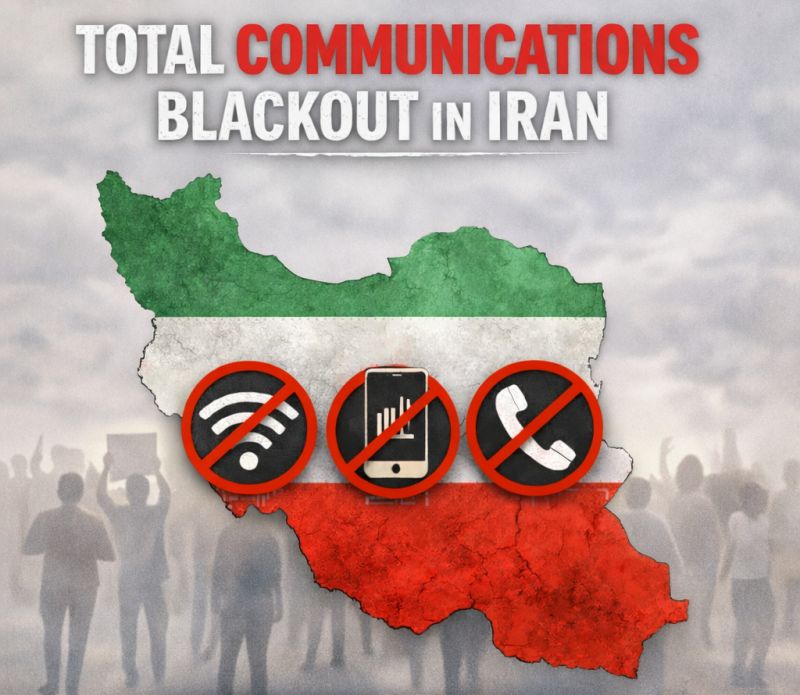
Nationwide internet blackouts are imposed at critical moments to cut communication between citizens and the outside world.
These shutdowns prevent coordination between civilians and limit access to advance warnings of attacks, increasing casualties that can later be attributed to foreign actors. In this way, the blackout does not simply interrupt communication inside Iran.
By removing Iranian voices from social media and restricting the flow of independent images, videos, and eyewitness reporting, the authorities allow official explanations to dominate coverage beyond Iran’s borders.
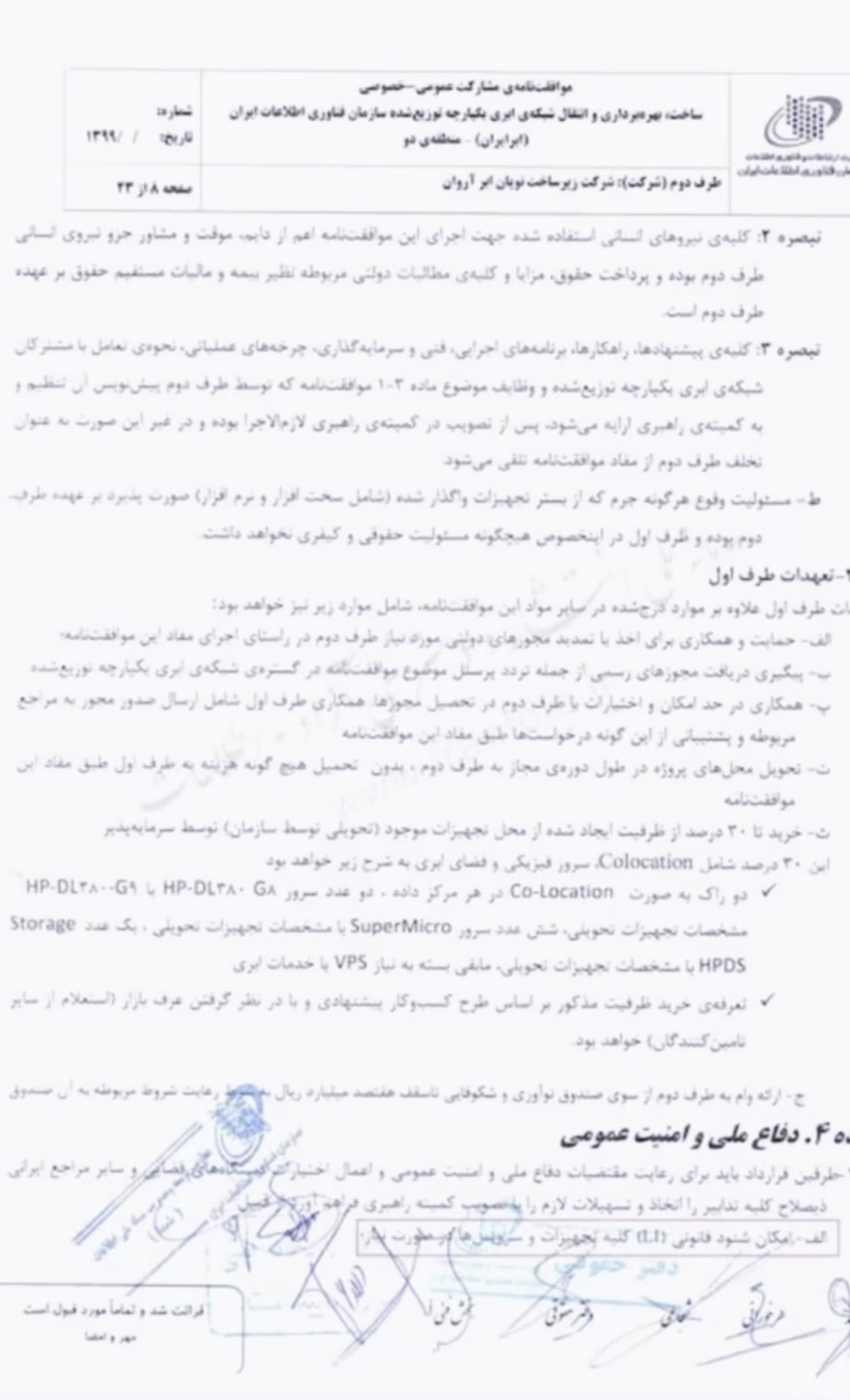
This document explicitly states that the project must comply with national defense and public security requirements: “طرفین قرارداد باید برای رعایت ملاحظات دفاع ملی و امنیت عمومی ” (“The parties to the agreement must comply with considerations of national defense and public security …”).
This is significant because it shows that Iran’s domestic cloud and network infrastructure is formally designed within a national security framework rather than as a neutral civilian communications system.
Infrastructure agreements involving Iran’s Information Technology Organization show that national cloud systems, including the state-backed “Iran Cloud” network, were designed as part of the regime’s internal security infrastructure, allowing authorities to constantly monitor and control domestic connectivity while restricting access to the global internet during protests.
This makes nationwide shutdowns a planned capability rather than an emergency response, as the regime claims.
When communication from inside Iran is restricted, official narratives face fewer challenges internationally. The regime’s external messaging strategy during these periods is outlined on THE REGIME’S PROPAGANDA page.
 Iran Explained