On February 11, 1979, Iran’s monarchy collapsed after months of nationwide protests involving a broad coalition of religious networks, students, nationalists, and organized left-wing movements, including socialist and Marxist groups as well as organizations such as the Mojahedin-e Khalq (MEK).
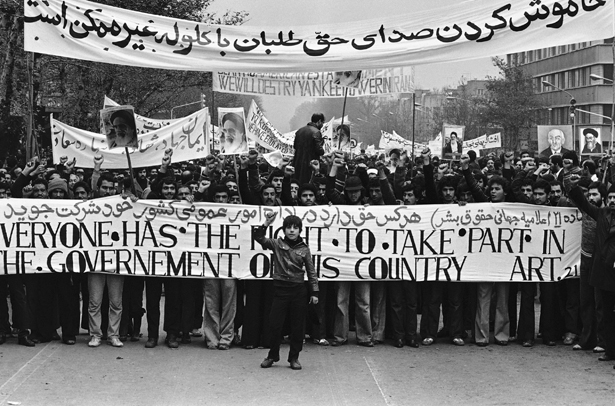
Mohammad Reza Shah Pahlavi had already left Iran on January 16. Ayatollah Ruhollah Khomeini returned from exile on February 1 and rapidly emerged as the central political authority. Following a national referendum in April 1979, the Islamic Republic was formally established.
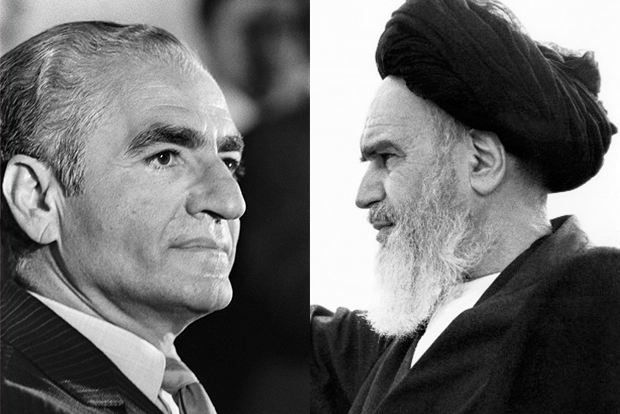
Many Iranians who participated in the revolution believed they were helping bring about political reform and greater freedom after the fall of the monarchy. Instead, authority was reorganized under the doctrine of velayat-e faqih (Guardianship of the Islamic Jurist), which concentrated ultimate power in the hands of a single senior cleric, the Supreme Leader.
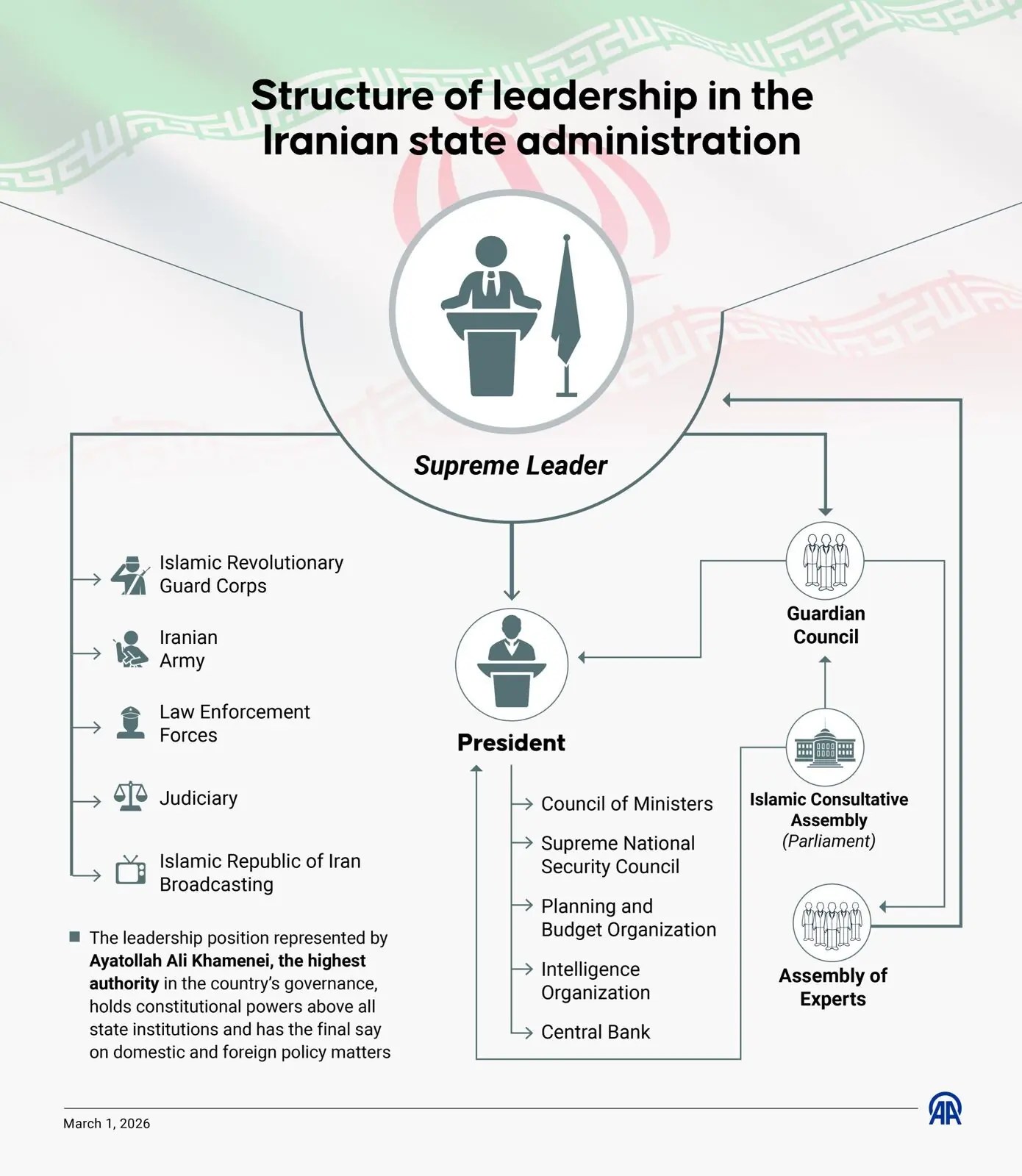
From its foundation, the new state defined itself as a religious system governed by its interpretation of Twelver Shia Islamic law (Sharia). Political authority was no longer derived primarily from parliament or elections, but from clerical oversight intended to ensure that legislation, public life, and the judiciary remained aligned with Islamic principles.
This structure, which still stands today, created a hybrid system that combined republican institutions, such as a president and parliament, with unelected religious bodies that held decisive authority over the military, courts, media, and key areas of national policy.
The Supreme Leader is not elected by the public. He controls:
- The armed forces
- The Islamic Revolutionary Guard Corps (IRGC)
- The Basij
- The intelligence services
- The judiciary
- All state broadcasting
- Senior military leadership
- Half of the Guardian Council
1989-2026
Ali Khamenei As Supreme Leader
After Khomeini’s death in 1989, the Assembly of Experts selected Ali Khamenei as Supreme Leader.
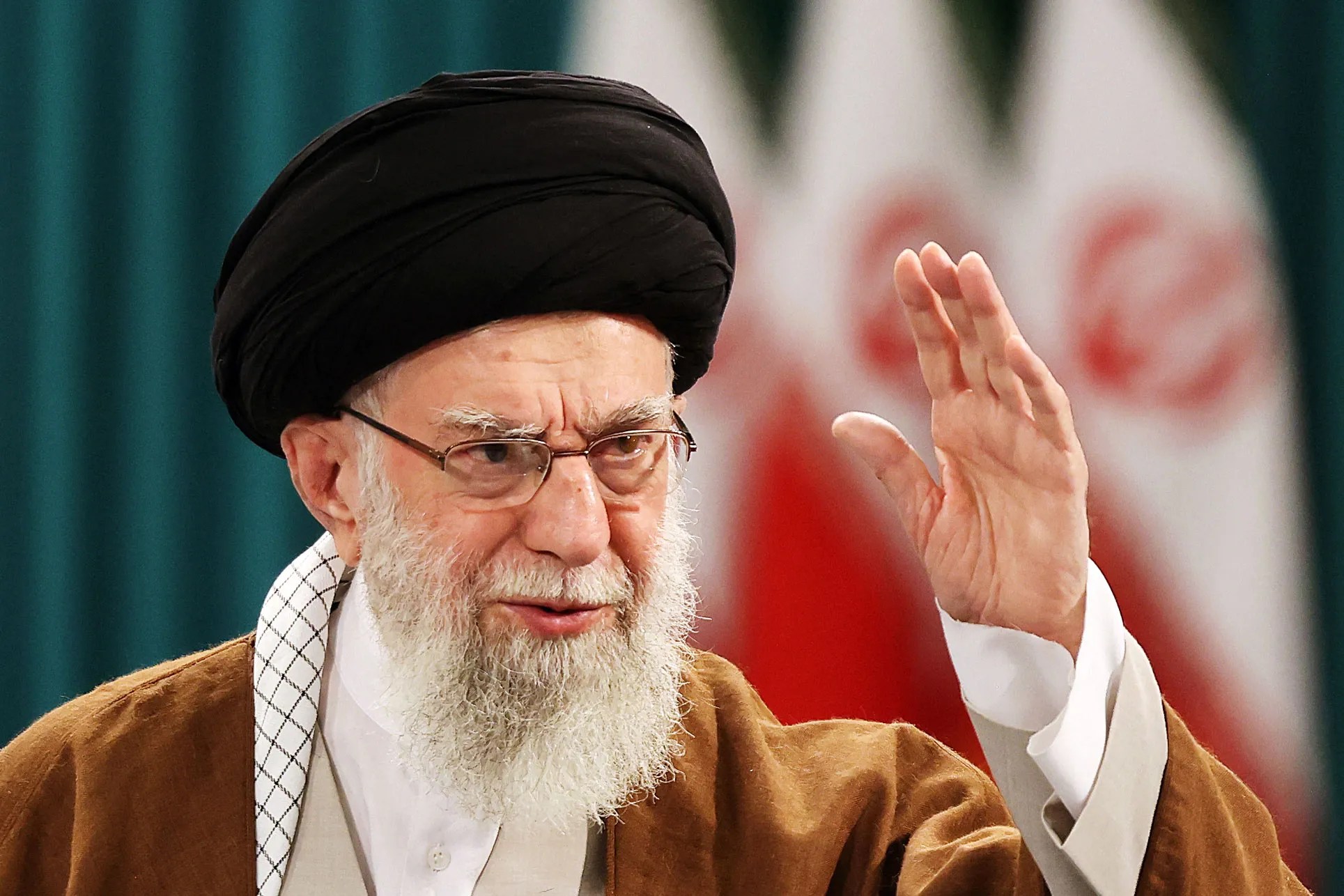
The institutional structure established after the revolution remained intact under Ali Khamenei’s leadership. Over time, authority within the system became more consolidated, particularly through the expanding influence of security institutions and unelected oversight bodies aligned with the Supreme Leader.
In March 2026, after Ali Khamenei was killed in the U.S. and Israel strikes, the Assembly of Experts announced Mojtaba Khamenei, the son of Ali Khamenei, as the new Supreme Leader. However, he has not appeared publicly since the announcement.
During official ceremonies marking his appointment as Supreme Leader, a cardboard cut-out with his face attached was displayed in place of a verified appearance. His continued absence has led to widespread speculation that he may be seriously injured or possibly dead.
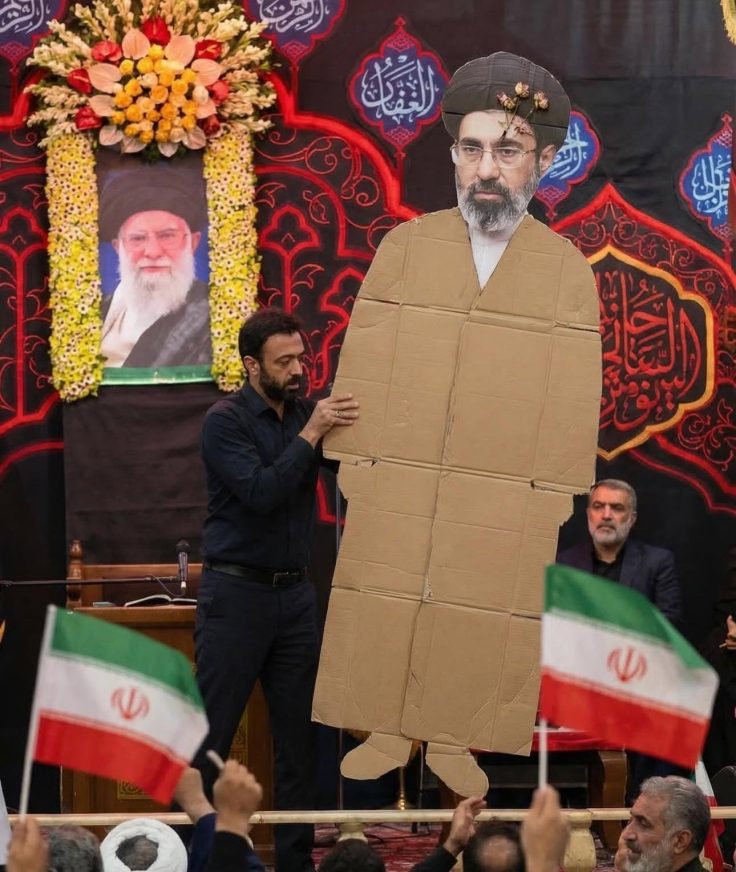
No independent confirmation of his condition has been provided, reflecting the opaque nature of leadership succession inside the Islamic Republic.
 Iran Explained