Iran is one of the world’s most resource-rich countries, with vast oil and gas reserves and a population that is highly educated by global tertiary-education standards. Despite this, the country faces persistent inflation, unemployment, and declining living standards, and a large proportion of the population lives in poverty.
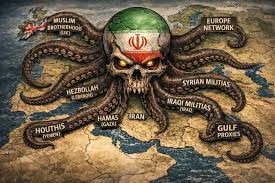
Significant national resources are directed into the military and security structures of the Islamic Revolutionary Guard Corps (IRGC), as well as its regional proxy networks.
The Quds Force is the external operations branch of the IRGC. It is responsible for funding, training, arming, and coordinating allied Islamist militant groups across the Middle East aligned with Iran’s regional strategy and security objectives.
Some of the best-known proxy groups include:
- Hezbollah in Lebanon
- Hamas in Gaza
- Houthis in Yemen
- Iranian-aligned militia networks in Iraq, including Kata’ib Hezbollah
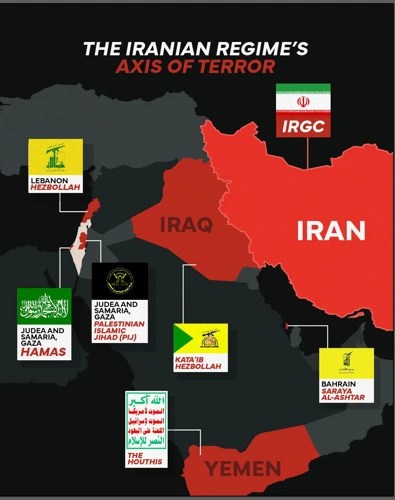
Several of these groups are designated as terrorist organizations by the United States, the United Kingdom, the European Union, Canada, and several regional governments. The operational relationship between the Quds Force and these networks has been widely documented by international security agencies and defense analysts.
Through these groups, the IRGC extends Iranian influence across the region without directly deploying conventional military forces. In other words, it operates largely within the grey zone of international law.
 Iran Explained